Now, researchers at the U.S. Department of Veterans Affairs found people’s risk for heart problems jumped after catching COVID-19, even if they lacked risk factors like obesity and diabetes. In their analysis of more than 11 million U.S. veterans’ health records, they found COVID increased their risk for a heart attack by 63%, problematic irregular heart rhythm by 69%, a stroke by 50%, heart failure 70%, and a nearly three times higher risk of a potentially fatal blood clot in the lungs. Even people who never went to the hospital had more cardiovascular disease than those who were never infected.
COVID-19 patients in this study were infected before vaccines were available, so it’s unclear how the shots might alter the findings, but the authors say their findings suggest millions of COVID-19 survivors could suffer long-term consequences and health-care providers around the world should be prepared to address an increase in cardiovascular conditions.
It is not entirely clear how covid could cause heart problems over the long term, though it is known that the virus can affect blood vessels all over the body and in multiple organs, including the heart.
]]>“We are completely honored to have Daniel join the team,” said Kevin Murdock, CEO of Premier Medical Laboratory Services. “His experience and knowledge of the field is extremely valuable in propelling us forward to fulfill our capabilities as a laboratory. He is a powerful addition to Premier, aiding in our mission to continually improve patient care with the latest in science and innovation.”
After completing his undergraduate studies at the University of Oxford, Dr. Hughes studied for a Ph.D. in Molecular Biology and Genomics at the University of Cambridge and Welcome Trust Sanger Institute. Dr. Hughes then spent time in Brazil, where he developed an interest in infectious diseases. He went on to work on the National Institute of Allergy and Infectious Diseases (NIAID) VectorBase project and Ensembl genome project at the European Bioinformatics Institute where he worked on numerous emerging genome projects. Subsequently, Dr. Hughes spent several years at the Human Genome Sequencing Center at Baylor College of Medicine as a Lead Scientific Programmer & Analyst working extensively on the application of High-Performance Compute for Genome Assembly, Variant Calling, Annotation, and Cancer Genomics.
He then moved to Columbia University’s Medical School to build their infrastructure for the analysis of the Genetics of Complex Human Diseases where he was promoted to Director of Genome Informatics and Software Engineering. Dr. Hughes proceeded into cancer research at M2Gen where he was the Director of Cancer Knowledge Base and Pharma Services. Now, he joins Premier Medical Laboratory Services as the Director of Bioinformatics.
“Working with the Premier Medical team has been great,” said Dr. Hughes, “It’s a dynamic environment that’s eager to bring in new challenges and meet the medical needs of the next generation.” Dr. Hughes also addressed Premier Medical’s growth in genome sequencing, “PMLS is adapting so quickly with all the state-of-the-art equipment. To think years ago, the first human genome took 10 years and cost millions. Now, with the machines Premier has, we can run 50 or 60 in a day or two and collect a large amount of data that can help us in our research.”
Learn more about Dr. Hughes’ position and goals for PMLS in the video below.
The BA.2 subvariant has been dubbed “stealth omicron” because it is difficult to detect as a mutation by PCR-based testing, the most common testing method for COVID-19. With the original BA.1 strain, scientists could use PCR-based testing to help identify omicron by looking for a S-gene dropout mutation. Once this was found, the scientists could be fairly certain the positive COVID-19 sample was the omicron variant. The stealth omicron subvariant does not have the S-gene dropout characteristic, making it difficult to distinguish BA.2 as the omicron variant vs. other COVID-19 variants by PCR-based testing alone.
In Denmark, BA.2 is now outpacing its predecessor, omicron BA.1, because it is more transmissible than BA.1. A study conducted by Denmark’s Statens Serum Institut (SSI), which analyzed coronavirus cases in over 8,000 Danish households between December and January, found that people infected with the BA.2 subvariant were roughly 33% more likely to infect others, compared to those infected with BA.1.
Throughout the world, the subvariant is currently present in 57 countries as reported to the GISAID database. With this data, scientists are determining how deadly the strain is and how well it evades the current vaccines. The genetic difference between BA.1 and BA.2 is greater than the difference between the original SARS CoV-2 variant and the alpha variant, according to SSI. These differences could cause increased severity, the SSI also stated. Fortunately, it is expected that COVID-19 vaccines will have an effect in the mitigation of severe illness upon BA.2 infection.
Increasing access to data on these new variants is so important for our overall understanding of the virus and how it will affect the population,” said Kevin Murdock, CEO of Premier Medical Laboratory Services.
As of February 1, 2022, the state of Florida reported two cases of BA.2. Now, PMLS has identified an additional case for the state and will continue to conduct surveillance to help gather vital data on this new omicron subvariant and others.
]]>Premier Medical Laboratory Services (PMLS) is proud to be back to our standard turnaround times of 24-48 hours. We have eliminated our backlog of tests and are now processing 95% of results in under 24 hours. Due to the ongoing Omicron surge, PMLS, like many labs across the country, experienced an unprecedented 733% increase in the number of tests to be processed. Through hard work, investments, and hirings, PMLS was able to “weather the storm” and get back to serving our country the right way.
Here is what Kevin Murdock, CEO of PMLS had to say on the topic: “Each test that we receive is important to us because we know that it affects someone’s quality of life. That’s why our team worked tirelessly to hire and train hundreds of South Carolinians and expand our infrastructure so that we could return to our normal turnaround times of results. We hold ourselves to the highest standards as a laboratory and look forward to serving South Carolina’s diagnostic testing needs.”
Cause to Testing Delays
Over the last month, laboratories and manufacturers across the country have struggled to keep up with testing demands due to the ongoing Omicron surge. On January 3 alone, the US logged more than 1 million new COVID-19 cases for the first time according to Johns Hopkins University. Scientists found the milestone was driven by the Omicron variant, which is more highly transmissible than other variants. This led to a massive uptick in testing, causing thousands of labs like PMLS to enter an unprecedented situation. From January 3 to the week of January 17, PMLS received an additional tens of thousands of daily tests, far more than their normal daily test volume. This created a backlog. Paired with a record-breaking snowstorm, shipping delays, and supply chain shortages our usual 24-hour turnaround on testing turned into several days. This did not sit well with our leadership at PMLS, so they acted quickly and drafted an immediate plan to get back on track.
Solutions to Testing Delays
PMLS invested millions of dollars in capital equipment to support our infrastructure. As of January 20th, we installed more than 30 machines, increasing our testing capacity by an additional 60,000 tests per day. We have also hired on 300 more employees since the beginning of January and are still working to add on more South Carolinians to the PMLS staff. With the new infrastructure and workflow optimizations, we are now processing tests in under 24 hours and expect to keep it that way. For more information on this from South Carolina Department of Health and Environmental Control (DHEC) please click on the following link: https://scdhec.gov/news-releases/dhec-announces-premier-medical-cleared-testing-backlogs-returning-wait-times-standard
]]>“Throughout the pandemic, we’ve been proactive in fulfilling our staffing needs,” said Kevin Murdock, CEO and Founder of Premier Medical Laboratory Services. “To ensure that we continue to properly meet testing demands amid this new surge, we are looking to vastly expand our team and to provide jobs in the community.”
PMLS is a CLIA and COLA certified laboratory. They are the choice processing lab for Health and Human Services testing sites, and the trusted COVID-19 management partner for professional sports teams, schools, colleges, large corporations, and health departments across the nation. With an expanding team, they are inviting members of the Upstate community to join them in providing vital services and information, helping to battle COVID-19 and its new variants and to improve the future of healthcare with advanced medical diagnostics.
Currently, the lab is looking to fill the following positions:
Medical Laboratory Technician
Responsible for performing medical tests in the Molecular Lab. Does not need to be certified if a degree in Chemistry or Biology has been attained.
Responsibilities:
- Collect and organize blood, tissue, and other bodily fluid samples from patients
- Prepare samples for routine testing and analysis
- Properly record results for further analysis and easy reference
- Monitor inventory samples and supplies
- Maintain a clean work environment
Qualifications:
- You must have experience as a Medical Technologist (ASCP Certificate that is CURRENT is a plus!)
- BS in Biology or Chemistry is also helpful
- Familiarity with common medical terminology
- Experience in a laboratory setting
- Strong organizational skills
Job Type: Full-time
Pay: $18-$22 per hour
Medical Technologist
Requirements:
- ***MUST HAVE EXPERIENCE WITH MANUAL EXTRACTION PROCESSES***
- Has earned a bachelor’s degree in a chemical, physical or biological science or medical technology from an accredited institution
- Has at least 2 years of current laboratory experience, in moderate complexity testing (Chemistry, Hematology, Urinalysis)
- Has 2 years of laboratory training or experience in high complexity testing (Allergy and/or Molecular)
Job Type: Full-time
Pay: $24-$28/hr
All positions located in Greenville, SC. Please email: HR@DIVMEDINC.COM to apply.
]]>“As a laboratory, reliability and consistency is key,” said Kevin Murdock, Founder and CEO of PMLS. “We pride ourselves on being able to deliver accurate results as quickly as possible with every sample we receive. We’ve built an infrastructure that allows us to process large numbers of tests rapidly so that we can truly make a meaningful impact. We look forward to working with the state of North Carolina to help keep their state departments and their economy healthy.”
Throughout the pandemic PMLS has served as the choice processing lab for Health and Human Services testing sites and the trusted COVID-19 management partner for professional sports teams, schools, colleges, large corporations, and health departments spanning from coast to coast. Along with their high capacity and fast turnaround times, PMLS is part of a house of brands under Diversified Medical Healthcare which manufactures testing supplies, develops medical data management software, and provides PPE to seamlessly meet the needs of these organizations without delay or disruption.
With a comprehensive approach to providing solutions, PMLS has also implemented one of the largest variant surveillance initiatives in the country, tracking novel variants like Omicron and Delta. They have the capability to perform next generation sequencing on up to 42,000 specimens per week to provide critical data for a better understanding of the virus and how it’s mutating over time.
]]>Premier Medical Laboratory Services (PMLS), headquartered in Greenville, SC, reports their findings that the Omicron variant is now confirmed to be present in the Upstate. The laboratory has been surveilling for Omicron and other novel variants through Next Generation Sequencing (NGS) in partnership with the Clemson University Bioengineering Department. Clemson University REDDI Lab has collected samples from throughout the upstate community and was funded through the National Institutes of Health (NIH) to then have these specimens undergo NGS at PMLS. NGS is the process of decoding the genetic make-up of the virus to track how it is mutating and spreading throughout the population.
“As a proactive and solutions-driven company, we implemented Next Generation Sequencing to meet the needs of our population with preparedness for novel variants like Omicron,” said Kevin Murdock, CEO and Founder of Premier Medical Laboratory Services. “Through partnerships like ours with Clemson University, we are happy to increase the amount of data for South Carolina and the entire nation which is vital for vaccine efficacy and our understanding of the virus.”
Knowing the importance of accumulating data in the continued fight against the pandemic, PMLS implemented one of the largest sequencing initiatives among any lab in the nation – with the capability to sequence up to 42,000 samples per week. Many labs that are conducting COVID-19 testing have not developed the capabilities to conduct sequencing, and new variants cannot be fully identified via COVID-19 diagnostic testing methods alone. PMLS will continue working to uncover any further novel variants and mutations that COVID-19 presents and notify health officials.
To learn more about our findings and partnership with Clemson University read MSN’s article.
Other ways PMLS has helped to meet demands during the pandemic:
- Processing lab for Human Health Services surge sites and several state health departments
- Blue Cross Blue Shield preferred COVID-19 testing lab in several states
- Reached one of the highest testing capacities in the nation with the capability to process over 300,000 tests per day
- Developed medical data management software that communicates directly from laboratory equipment for faster HIPAA compliant delivery of data to healthcare providers and patients
- Shifted production to add in-house manufacturing of COVID-19 testing kits
- Donated thousands of COVID-19 tests to children’s diabetes summer camps throughout the nation
- Donated hundreds of thousands of masks to local law enforcement, paramedics, fire departments, hospitals, and the Shriners organization and has provided free testing to first responders during the pandemic
The United States’ first confirmed case of the Omicron coronavirus variant has been identified in California. In a White House briefing, Dr. Anthony Fauci, director of the National Institute of Allergy and Infectious Diseases, said the virus is present in an individual who traveled to California from South Africa, where the variant was first reported. Dr. Fauci said the individual is self-quarantining and is experiencing “mild symptoms, which are improving at this point.”
The California Public Health Departments confirmed the case was caused by the Omicron variant through Next Generation Sequencing (NGS). The sequence was confirmed by the US Centers for Disease Control and Prevention and reported today. They’re also using NGS to answer questions like, how transmissible is it and how severe is the disease it causes? Next Generation Sequencing has allowed us to search for answers throughout the COVID-19 pandemic. That’s why Premier Medical Laboratory Services (PMLS) has implemented one of the largest initiatives for NGS in the US with a capacity to sequence the genomes of 21,000 specimens per week, a capacity that surpasses most laboratories due to PMLS’ implementation of cutting-edge high throughput lab equipment which automates workflow.
Dr. Vidhya Narayanan, the Technical Lab Director of Premier Medical Laboratory Services, who previously served as the Genomics Scientist for the CDC says “not a lot is known about the Omicron variant yet, and even if its transmission rates are found to be higher than the Delta variant, that still doesn’t mean that it’s more deadly. But there is a huge demand right now for COVID labs that are doing PCR testing to also conduct sequencing like we are at PMLS so that we can slow the spread of this variant early on.” She went on to say, “Out of all of the labs that conduct COVID-19 testing, only about 1 out of 100 are also conducting sequencing initiatives. Because of labs like ours, who are conducting NGS, we should know more over the next few days about Omicron.”
The Omicron variant is the quickest to be labeled a “variant of concern” by the World Health Organization (WHO) because of its seemingly fast spread in South Africa. Besides Africa, the Omicron variant has been detected in several counties including Canada, and now the US. The positive test from California was first detected on November 29th. The CDC said the Omicron variant was identified in under 30 hours “from the time of collection to strain confirmation.”
President Biden said Monday “It’s a cause for concern, not a cause for panic.” He also urged Americans, again, to get vaccinated and to get their booster shot, saying it’s the best protection against this new variant, as well as any others. However, scientists now worry the Omicron variant may be able to evade the body’s immune responses, both to vaccination and to natural infection, more than prior versions of the virus. As scientists continue to scramble for data, they believe the current vaccines should work on the variant for now. Still, the makers of the two most effective vaccines, Pfizer-BioNTech and Moderna, are preparing to reformulate their shots if necessary.
A slew of travel bans went into effect after the news of the Omicron variant emerging. For the US, restricted travel from several countries in Southern Africa went into effect Monday, giving the US more time to respond. President Biden said he would put forward a “detailed strategy outlining how we’re going to fight COVID this winter. Not with shutdowns or lockdowns, but with more widespread vaccinations, boosters, testing, and more.”
As COVID-19 variants continue to impact the health of our nation, vaccination and testing mandates are becoming a reality we all have to adjust to. At PMLS, our goal is to make this as easy and effective as possible so that our economy and our population remain healthy and safe. We are teaming up with employers across the country to provide testing solutions and prevention strategies, slow the spread of COVID-19, and provide a mandate compliance framework that will best protect our communities. Click here to read about our COVID management program.
]]>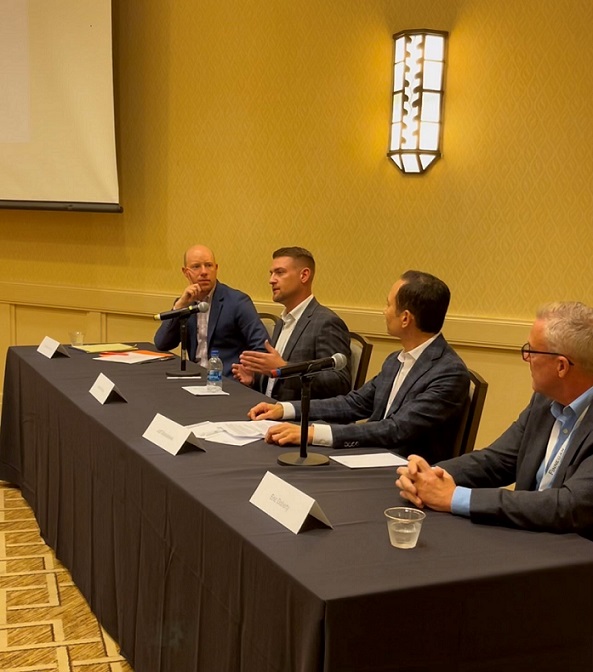
Last week, at the annual Southeast Life Sciences Conference, organizations like SCBIO, Bio Alabama, Georgia Bio, Life Science Tennessee, NC Bio, and Virginia Bio all gathered with top life sciences companies to network and discuss ways to advance healthcare. Austin Shirley, VP of Commercial Operations at Diversified Medical Healthcare (DMH), and team were at the conference representing all the DMH brands including Premier Medical Laboratory Services (PMLS), CPT, OnGen, and Vessel Medical. During the conference, Austin joined Eric Doherty, President of Blink Science, and Joff Masukawa, President of Diligentia Strategy, for a panel discussion titled “Diagnostics: Moving to the Forefront of Global Healthcare.”
The panel kicked off with the impact of the COVID-19 pandemic on the rapidly evolving diagnostics industry. In 2020, labs and healthcare facilities quickly had to shift gears as the virus spread around the U.S. The pandemic disrupted and even destabilized the industry as a whole, creating obstacles to overcome for labs like PMLS and its sister companies. Although these challenges were presented, they had a profound impact on the life sciences industry and even forced many companies in the life sciences to expand their offerings. As a result, in many ways, companies in life sciences improved and/or changed a lot of their protocols and processes for a more efficient infrastructure.
As an example, Diversified Medical companies were positioned to meet infrastructure restrictions head-on with a facility already FDA registered and already conducting molecular testing. “We started to notice on the lab side that the supply chain for specimen collection kits and viral transport media was one of the biggest issues,” said Austin Shirley. “So, we began manufacturing these through our company, CPT Medical. We were able to supply our lab with specimen collection kits and keep testing without any hiccups from the supply chain. We also sold these kits to other labs and still are. I think last week we passed a milestone of 2 million specimen collection kits manufactured from a company (CPT Medical) that, a year and a half ago, wasn’t in the business of that.”
Overall, the pandemic put a spotlight on the diagnostics industry and its role in the global healthcare ecosystem, but what about its future? In the panel discussion, Austin delved into rapid point of care testing and how personalized care will affect the future of diagnostics. “Diagnostics could play a role, really in preventative health and how we integrate biometric data from rapid point of care tests into a patient’s polygenic risk score.” He continued to discuss the sensitivity and specificity of point of care assays and how, as we move forward with the accumulation of more data, we will improve the accuracy of point of care testing to make diagnostic testing faster for better patient outcomes. He also explored how, with the help of artificial intelligence, personalized care can be used more to prevent disease rather than just to diagnose currently existing diseases within patients.
The SE Life Sciences conference and the discussion panel itself were an impactful platform to discuss our plans to move healthcare forward and how we can work with like-minded companies, Blink Science and Diligentia Strategy, to make healthcare more efficient and effective for advanced and more individualized patient care.
]]>The President’s requirements would apply to more than 130,000 businesses across the U.S. and would affect about 80 million workers nationwide. The mandate could result in 12 million people, or more than 3% of the total population, getting vaccinated by March, according to analysts at Goldman Sachs, and could bring the rate of partial vaccination among the total American population up to 82% by mid-2022, the analysts found. They also noted that about 90% of adults would have at least one dose of a vaccine.
Vaccination rates against COVID-19 in the U.S. have risen by more than 20 percentage points after multiple institutions adopted vaccine requirements in recent months, the Biden Administration reported. However, many American workers are still hesitant about getting their COVID-19 shots. Meaning, the mandate’s testing option will likely put a large strain on the nation’s testing infrastructure as increased demand is expected. Taking this into account, PMLS is prepared with one of the largest testing capacities in the nation and in-house manufacturing for unlimited testing supplies.
“When other laboratories scaled back during the lull in cases over the summer due to a drop in testing demand, we did not,” said Kevin Murdock, CEO and Founder of PMLS. “We kept building up our capabilities as a laboratory to be prepared for another surge like the one we are facing now. For this reason, we are prepared to handle exponentially more than most laboratories throughout the country.”
PMLS’s automated workflow with state-of-the-art laboratory equipment has enabled them to process up to 300,000 COVID tests per day with 98% of results provided in under 24 hours. Their team of leading Ph.D. scientists has been instrumental in the nation’s COVID-19 response. Because of this, PMLS is the trusted testing partner for professional sports teams, schools and colleges, large corporations, and state health departments throughout the nation.
With their advanced infrastructure in place, PMLS’s Keep America Thriving program is specifically designed for manufacturing companies, distribution and fulfillment centers, large-scale retail, construction, and organizations with large, in-office employee operations. Keep America Thriving offers the following to these entities:
- A turnkey customized onsite testing program for continual supply of test kits for fast, accurate results
- Onsite training and consulting for proper testing methods and customized strategy for most effective testing measures
- Rapid antigen tests
- PCR tests which can be stocked onsite
- Companies would be charged upon use and supply would replenish automatically
- No medical professional is required to administer these FDA authorized tests